EDITOR’S NOTE: PETS+ is the media partner for GROOM’D, the annual grooming-focused pet trade show presented by World Pet Association. The PETS+ team will be reporting live from Atlanta, GA, Friday through Sunday. To not miss any of the action, like our Facebook page and sign up for the daily GROOM’D ebulletin at petsplusmag.com/subscribe.
Denise Heroux (The Ambitious Groomer) is a well-known speaker who helps grooming professionals gain clarity, confidence and control in their businesses. Her session “Communicate to Lead: Elevating Your Team Through Intentional Dialogue” was filled with useful, actionable strategies for improving communication with both clients and employees, as well as supporting better mental health. These strategies can be applied to many other areas of life beyond the workplace as well.
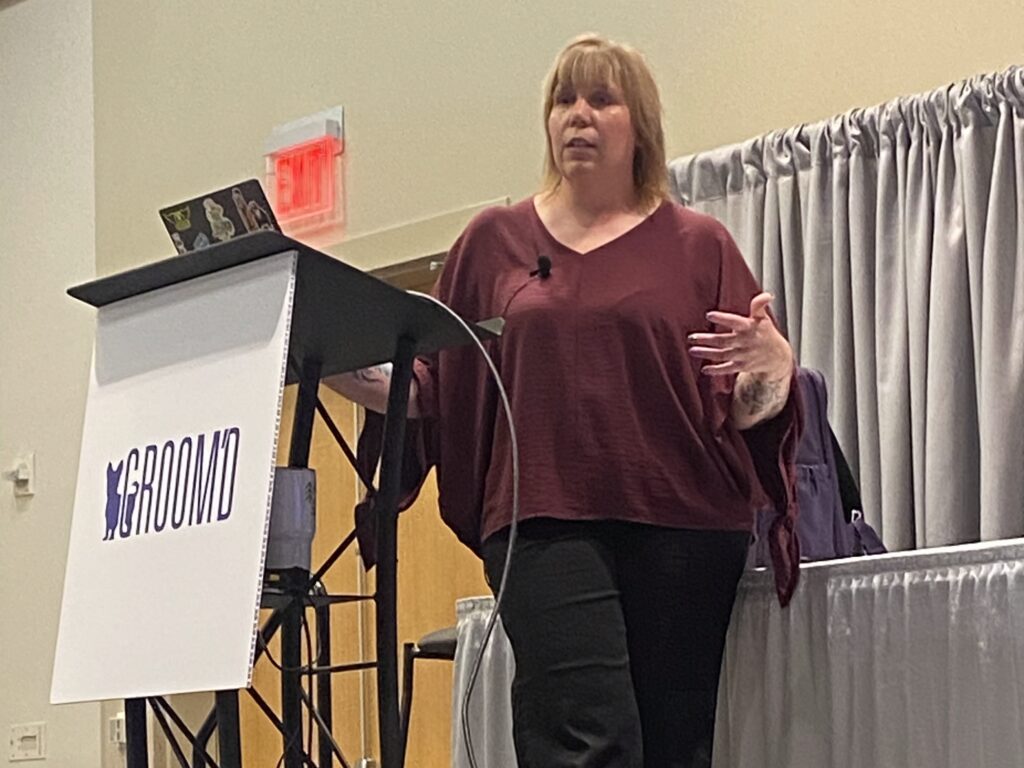
Denise Heroux discussed the different communication styles — assertive, passive and aggressive — and recommended one for groomers.
Heroux discussed several common communication challenges that arise with employees, including misunderstood job duties, ineffective feedback practices, favoritism or unequal treatment, and the impact of stress and burnout.
With clients, examples of common challenges included handling complaints poorly (or not addressing them at all) as well as inconsistent communication and unclear cancellation or late policies.
She then discussed the different communication styles — assertive, passive and aggressive — explaining that assertive communication is the style professionals should strive for because it encourages clear and effective dialogue.
Advertisement
Assertive communication includes these key elements:
- Clarity: Using simple, direct and detailed language to avoid confusion.
- Empathy: Putting yourself in the other person’s shoes and acknowledging their feelings without minimizing them or necessarily agreeing or disagreeing.
- Active Listening: Paraphrasing and summarizing what the other person has said to confirm that both parties understand each other.
When discussing difficult issues, such as safety concerns, employee performance issues, poor attitudes or client complaints, Heroux advised remaining neutral and objective, focusing on facts rather than feelings. It’s important to stay calm and focused and not allow the conversation to get sidetracked.
She recommends starting the conversation with something positive instead of immediately focusing on the problem (addressing issues early can prevent them from growing into larger problems). During the discussion, focus on the issue rather than the person, and use “I” or “We” statements instead of “You” statements to avoid sounding accusatory.
End the conversation with encouragement, support and possible solutions. However, she noted that while you can offer guidance and help, you can’t control how the other person will react to the conversation or the options you provide.
Read more PETS+ coverage of GROOM’D 2026.